
Designing a child’s room is not only about decoration. The space where children sleep, study, and play influences their mood, concentration, and overall development.
In Vastu, the children’s bedroom is designed to create a balanced environment that supports learning, emotional stability, and restful sleep. Instead of treating Vastu as superstition, it can be understood as spatial wellness and energy optimization based on direction, light, airflow, and layout.
This guide explains the correct directions, placement, colors, and practical remedies to create a supportive environment for children.
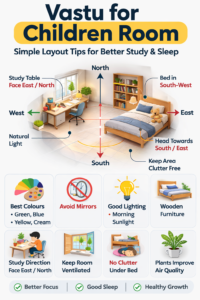
At-a-Glance: Ideal Vastu Placement for Children’s Room
| Element | Best Direction | Why It Works |
|---|---|---|
| Bedroom Location | West, North-West, or South-West | Supports stability, maturity, and disciplined growth |
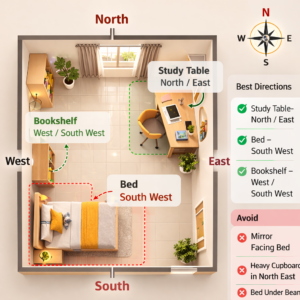
| Bed Placement | South-West area of room | Provides grounding and stable sleep |
| Sleeping Direction | Head towards South or East | Aligns with Earth’s magnetic field and supports deeper sleep |
| Study Table | Facing East or North | Enhances concentration and mental clarity |
| Bookshelf | North-East | Associated with knowledge and learning energy |
| Windows | East or North | Allows morning sunlight and healthy ventilation |
| Colors | Light green, pastel yellow, cream, light blue | Creates a calm and focused atmosphere |

The Three Core Zones of a Child’s Room
To understand Vastu practically, it helps to divide the room into functional energy zones.
The Sleep Zone (South-West): Stability and Rest
Sleep quality directly affects a child’s learning ability and emotional health. The South-West zone is associated with stability and grounding in Vastu.
Ideal Bed Placement
- Place the bed in the South-West part of the room.
- The head should face South or East while sleeping.
Why This Direction Matters
The Earth has a natural north-south magnetic field. When a person sleeps with their head towards the south, the body aligns better with this field, which may support deeper rest and improved circulation.
Proper sleep also improves:
- memory retention
- emotional balance
- learning ability
Additional Sleep Zone Tips
- Use wooden beds instead of metal frames
- Avoid placing the bed directly under exposed beams
- Keep the sleeping area free from heavy electronics
A calm and stable sleep zone supports a child’s physical and mental development. (
The Knowledge Corner (East / North): Learning and Focus
Children spend a significant amount of time studying. The placement of the study table and books directly influences concentration levels.
Ideal Study Table Direction
The study table should be positioned so the child faces:
- East (best for learning and clarity)
- North (supports analytical thinking)
Why These Directions Work
Morning sunlight enters from the east. Exposure to natural morning light stimulates serotonin production, which helps improve:
- focus
- alertness
- mood stability
A well-lit study area naturally reduces fatigue and distraction.
Study Zone Setup
For better focus:
- Place the bookshelf in the North-East corner
- Keep a solid wall behind the child while studying
- Avoid studying facing blank walls or clutter
What to Avoid
- Study tables facing directly towards doors
- Sitting with windows directly behind the chair
- Cluttered desks
A clean and organized study zone helps children maintain mental clarity and discipline.
The Energy Flow (Doors, Windows & Layout)
Energy circulation in a room depends largely on light, ventilation, and movement space.
Ideal Door Placement
Doors in the East or North direction allow smoother energy circulation in Vastu design.
Importance of Natural Light
Children’s rooms should receive morning sunlight, which helps:
- improve indoor air quality
- reduce microbial growth
- regulate sleep cycles
Morning sunlight also supports vitamin D synthesis, which is important for children’s bone health.
Window Placement
Windows should ideally be located in:
- East
- North
These directions ensure healthy airflow and balanced lighting throughout the day.
Best Colors for Children’s Room as per Vastu
Colors influence psychology and emotional behaviour.
Recommended Colors
| Color | Benefit |
|---|---|
| Light Green | Calmness and emotional balance |
| Pastel Yellow | Stimulates learning and positivity |
| Light Blue | Promotes relaxation |
| Cream or White | Creates a peaceful environment |
Soft shades help create a calm and non-stimulating atmosphere, which supports concentration.
Colors to Avoid
- Dark red
- Black
- Dark blue
- Very bright neon shades
Dark colors may create a heavy atmosphere and reduce mental calmness.
Decorative Elements That Support Positive Environment
Decor plays a subtle psychological role in a child’s development.
Recommended Decor
- Nature paintings
- Motivational images
- Study achievement boards
- Indoor plants like money plant or bamboo
Avoid
- Violent imagery
- Aggressive animal posters
- Cluttered walls
- Broken toys or objects
Positive visuals encourage optimism and creativity in children.

Common Vastu Defects in Children’s Rooms
Many homes are already constructed, so changing room directions is not always possible.
Here are common layout issues parents face.
1. Bedroom in the South-East
This direction is associated with the fire element, which may create restlessness.
Possible effects
- difficulty sleeping
- irritability
- hyperactivity
2. Bed Facing Door Directly
This can cause subconscious disturbance during sleep.
3. Poor Ventilation
A closed room without sunlight may lead to:
- reduced focus
- dull mood
- lack of freshness
Non-Invasive Vastu Remedies (Without Structural Changes)
These practical remedies help balance the environment even when the room direction cannot be changed.
| Problem | Simple Remedy |
|---|---|
| Bedroom in South-East | Use light green or pastel colors to balance the fire element |
| Poor sleep | Keep head facing South while sleeping |
| Low concentration | Study table facing East |
| Excess negative energy | Keep a bowl of rock salt and replace it weekly |
| Cluttered study area | Maintain organized storage for books and toys |
| Poor light | Add warm white lighting and open curtains during morning |
These adjustments improve spatial balance without renovation.
Additional Practical Tips for Parents
Small habits inside the room can make a big difference.
Maintain Clean Energy
Encourage children to:
- Keep books organized
- Avoid clutter on the study table
- Keep toys stored properly
Clutter often leads to distraction and mental overload.
Limit Electronic Distractions
Avoid placing:
- televisions
- gaming consoles
- large mirrors
inside the bedroom study zone.
Children perform better when their study environment remains distraction-free.
Creating a Balanced Space for Growth
The goal of Vastu is not perfection but creating a supportive environment for a child’s growth.
When the bedroom has:
- proper light
- balanced colors
- organized study area
- comfortable sleep direction
Children naturally develop better discipline, focus, and emotional stability.
These spatial adjustments help create a healthy and encouraging environment, though they should not be viewed as replacements for parenting, education, or medical care.
Need Professional Vastu Guidance?
Every home layout is different, and sometimes a personalized analysis is necessary to identify deeper spatial imbalances.
For detailed guidance, you may consult Dr. Raviraj Ahirrao, a Vastu expert with over 28 years of experience helping families design balanced living spaces.
A professional Vastu assessment can help you:
- evaluate the entire home layout
- identify hidden directional defects
- receive practical remedies without major reconstruction
A well-designed space can support your child’s focus, confidence, and growth for years to come.


